

The Middle East and Global Energy Markets
Middle East oil impact refers to the effects of production levels, geopolitical conflicts, and export disruptions in the Middle East on global crude oil prices, supply chains, and energy security. The Middle East holds roughly 48% of the world’s proven oil reserves and accounts for a significant share of daily global oil output, making any disruption there a direct threat to petroleum market stability worldwide.
The main effects of Middle East oil disruptions include crude oil price volatility, tightening of global inventories, rising costs for diesel and jet fuel, and knock-on pressures across related commodity markets such as fertilizers and aluminum. The benefits of monitoring and responding to Middle East oil impact, as the International Energy Agency (IEA) and partner institutions do,are stabilized energy prices, coordinated emergency stock releases, and reduced economic damage to oil-importing nations.
The key components driving Middle East oil impact are production capacity across OPEC+ members such as Saudi Arabia, Iraq, Kuwait, Iran, and the United Arab Emirates (UAE); the Strait of Hormuz as the critical transit chokepoint; pipeline infrastructure and alternative export routes; refining capacity in the Gulf region; and the strategic petroleum reserves held by IEA Member countries.
Current Market Backdrop
Oil and natural gas prices have risen sharply since the conflict in the region escalated on 28 February 2026. Brent futures, the global benchmark for crude prices, were roughly one-third above pre-conflict levels by late May 2026. Physical crude prices climbed even higher, reflecting acute supply tightness as refiners scrambled to replace Middle Eastern cargoes.
Dutch TTF (Title Transfer Facility), the European benchmark for natural gas prices, rose more than 40% between late February and late May 2026.
Cumulative oil supply losses from Middle Eastern producers now exceed 1 billion barrels, with more than 14 million barrels per day (mb/d) of production shut in. Observed global inventories, including oil on water, fell by 250 million barrels over March and April 2026, equivalent to a draw of 4 mb/d.
Markets for oil products have been particularly hard hit. Diesel and jet fuel supplies tightened severely after Gulf refinery output dropped. Jet fuel prices nearly tripled after Middle Eastern exports were cut off. Aviation activity fell well below normal levels, partly cushioning demand pressure on jet fuel.
The petrochemical sector has seen the steepest consumption losses, as feedstock availability became increasingly constrained.
IEA’s Role and Oil Stock Release
Ensuring energy security has been at the center of the IEA’s mission since its founding in 1974, following the major oil crisis of 1973. Each of the IEA’s 32 Member countries is required to hold oil stocks equivalent to at least 90 days of net oil imports and to be ready to respond collectively to severe supply disruptions.
On 11 March 2026, IEA Member countries unanimously agreed to release 400 million barrels of emergency oil stocks, the largest coordinated release in the Agency’s history. The release consists primarily of crude oil, with European contributions taking the form of refined oil products, complemented by additional production increases from countries in the Americas.
This is the sixth collective action in IEA history. Previous coordinated releases occurred in 1991, 2005, 2011, and twice in 2022.
The IEA, International Monetary Fund (IMF), and World Bank formed a coordination group to maximize their combined response to the energy and economic impacts of the conflict. The group held its first meeting on 13 April 2026.
A new IEA report, Sheltering from Oil Shocks, outlines demand-side measures that governments, companies, and households can take to ease price pressures on consumers.
Why Is the Strait of Hormuz So Important?
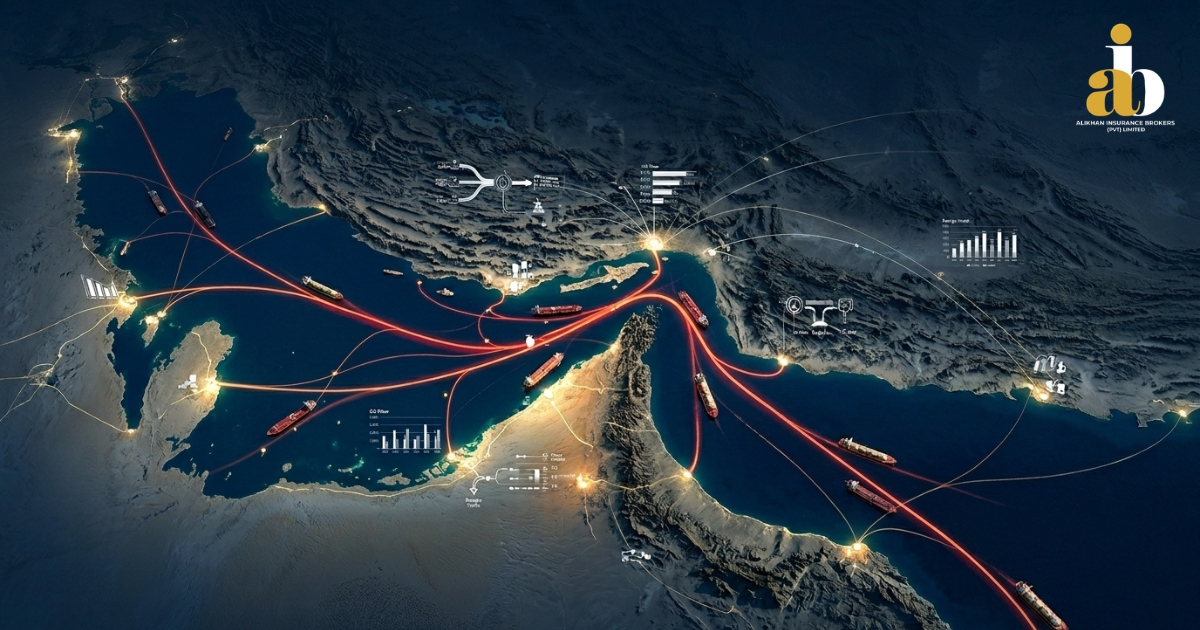
The Strait of Hormuz is a narrow sea passage separating the Arabian Peninsula and Iran, connecting the Persian Gulf with the Gulf of Oman and the Arabian Sea. It is the primary export route for oil and natural gas produced by Saudi Arabia, the UAE, Kuwait, Qatar, Iraq, Bahrain, and Iran.
Around 25% of the world’s seaborne oil trade transited the Strait in 2025. Traffic through the Strait has been essentially halted since the conflict began, putting pressure on the trade of a wide range of energy products.
Global gas markets face equally severe disruption. About 20% of the world’s supply of liquefied natural gas (LNG) moved through the Strait in 2025. The disruption of transit via the Strait has reduced LNG supplies from Qatar and the UAE by over 300 million cubic metres (m³) per day since 1 March 2026, a loss exceeding 2 billion cubic metres (bcm) of gas supply every week.
The Ras Laffan facility in Qatar, the largest LNG liquefaction plant in the world, has been offline since it was first attacked on 2 March 2026. Damage to LNG infrastructure in Qatar is set to delay the anticipated global LNG supply wave by at least two years, with a cumulative supply loss of around 120 bcm projected between 2026 and 2030.
Natural gas prices in Asian markets have risen sharply to attract additional LNG cargoes, and some countries have introduced gas rationing in response.
Alternative Routes
Options for oil flows to bypass the Strait of Hormuz are limited. Only Saudi Arabia and the UAE have operational crude pipelines capable of rerouting flows, with an estimated combined capacity of 3.5 mb/d to 5.5 mb/d. Iran, Iraq, Kuwait, Qatar, and Bahrain rely on the Strait for the vast majority of their oil exports and have no viable bypass routes.
About 80% of oil and oil products transiting the Strait in 2025 was destined for Asia. There are no alternative routes for LNG volumes from Qatar and the UAE.
Crude Oil Exports Transiting the Strait of Hormuz by Destination (2025)
In 2025, Asian markets received the dominant share of crude oil moving through the Strait. Approximately 93% of Qatar’s and 96% of the UAE’s LNG exports transited through the Strait, representing nearly one-fifth of global LNG trade. Just over 10% of LNG volumes went to Europe.
Saudi Arabia and the UAE have redirected some exports to terminals loading outside of the Strait. Despite this, mounting supply losses continue to deplete global oil inventories at a record pace.
Oil Products Transiting the Strait of Hormuz by Destination (2025)
The Gulf region exported 3.3 mb/d of refined oil products and 1.5 mb/d of liquefied petroleum gas (LPG) in 2025. Nearly 3 mb/d of refining capacity in the region has shut down due to attacks and a lack of viable export outlets. Refiners outside the region are also curtailing operations due to concerns over feedstock availability.
Middle distillate markets, diesel and jet fuel, were already relatively tight before the conflict, leaving limited flexibility for non-Gulf refineries to compensate for sustained supply losses.
Impact on Other Key Commodities
Disruptions to shipping through the Strait of Hormuz have extended well beyond oil and gas markets.
Fertilizers
More than 30% of global urea trade moves through the Strait, along with about 20% of ammonia and phosphate trade. These disruptions create direct risks for food prices and food security globally.
Aluminum
The Gulf region produces around 8% of the global aluminum supply, a metal used in numerous energy technologies, construction, and manufacturing. About 5 million tonnes of aluminum are shipped each year through the Strait from smelters in Bahrain, Qatar, Saudi Arabia, and the UAE.
Sulphur
Around half of the global seaborne sulphur trade moves through the Strait of Hormuz. Sulphuric acid is used in fertilizer and chemical production, petroleum refining, and the processing of critical minerals, including copper, nickel, and zinc.
Oil Market Report (May 2026)
The IEA’s Oil Market Report, published on 13 May 2026, provides the latest data on supply losses, inventory draws, and price movements. The report highlights that producers outside the Middle East have pushed output higher and lifted exports to record levels in response to the crisis.
Sheltering from Oil Shocks
The IEA report Sheltering from Oil Shocks outlines three categories of measures to reduce the consumer impact of the current oil price shock:
- Government demand-restraint policies
- Corporate supply-chain adjustments
- Household-level energy conservation actions
World Energy Outlook 2025
The IEA’s World Energy Outlook 2025 assessed the structural dependence of global energy markets on Middle Eastern supply and flagged the Strait of Hormuz as the world’s most critical maritime energy chokepoint.
Energy Technology Perspectives 2026
The IEA’s Energy Technology Perspectives 2026 examined how the current Middle East oil supply crisis accelerates or delays the energy transition. Higher oil prices increase the economic competitiveness of renewable energy and electric vehicles but also reduce the fiscal space of oil-importing developing countries to invest in clean-technology infrastructure.
2026 Energy Crisis Policy Response Tracker
The IEA’s 2026 Energy Crisis Policy Response Tracker catalogues government actions taken in response to the energy market impacts of the Middle East conflict. The tracker covers demand-curbing measures, consumer support programs, and emergency supply actions across IEA Member countries and partner nations.
Reliance on Middle East Oil and Gas Supplies by Country
Countries vary significantly in their exposure to Middle East oil supply disruptions. Asian economies, including Japan, South Korea, India, and China, receive the largest share of crude oil and LNG transiting the Strait of Hormuz and face the greatest direct supply risk.
European nations hold significant emergency stocks and have more diversified supply sources, while the United States has greater insulation through domestic production and Strategic Petroleum Reserve (SPR) stocks.

Joint Statement by Global Institutions
The heads of the IEA, IMF, World Bank Group, and World Trade Organization (WTO) issued a joint statement acknowledging the severity of the Middle East oil supply disruption and committing to coordinated action.
Conclusion
The Middle East oil impact on global energy markets in 2026 represents the largest supply disruption in the history of the oil market. The combination of Strait of Hormuz transit restrictions, attacks on Gulf energy infrastructure, LNG supply losses from Qatar and the UAE, and cascading effects on fertilizer, aluminum, and sulphur markets has triggered a coordinated IEA emergency response unprecedented in scale.
Resuming energy flows through the Strait of Hormuz, stabilizing Brent crude prices, and rebuilding global oil inventories remain the three central objectives driving IEA policy, OPEC+ decisions, and government energy security strategies worldwide.