

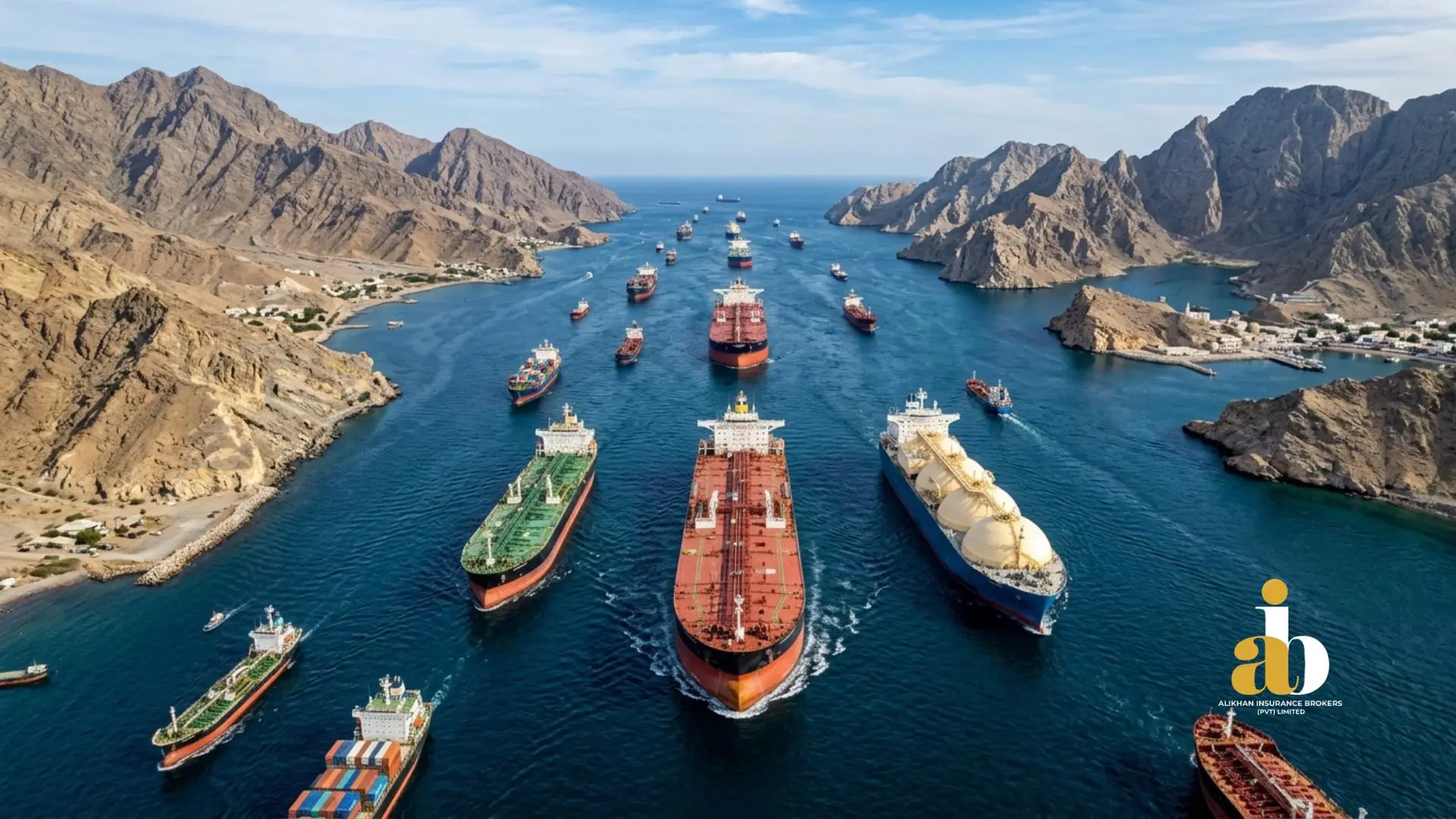
The Strait of Hormuz is a narrow waterway between Iran and the Arabian Peninsula that controls roughly 25% of the world’s seaborne oil trade and about 20% of global liquefied natural gas (LNG) supply. No other single shipping route carries this much energy. When the Strait is open, global energy markets function smoothly. When it is blocked or threatened, oil prices rise, gas supplies tighten, and economies around the world feel the impact within days.
The Strait connects the Persian Gulf, home to major oil and gas producers such as Saudi Arabia, Iraq, Kuwait, Qatar, the United Arab Emirates (UAE), Bahrain, and Iran, to the Gulf of Oman and the Arabian Sea, creating a critical route for global energy exports.
Where Exactly Is the Strait of Hormuz?
The Strait of Hormuz lies between the southern coast of Iran to the north and Oman’s Musandam Peninsula to the south. The UAE borders the Strait on its western side.
It connects:
- The Persian Gulf to the west, where most Middle Eastern oil and gas production is located.
- The Gulf of Oman to the east, which opens into the Arabian Sea, and global shipping routes.
Every oil tanker and LNG carrier leaving Saudi Arabia, Iraq, Kuwait, Qatar, Iran, Bahrain, or the UAE must pass through this corridor before reaching international markets.
How Much Oil and Gas Moves Through the Strait?
The Strait of Hormuz is the world’s most important energy chokepoint.
In 2025, approximately 20–21 million barrels of crude oil and refined petroleum products passed through the Strait every day, accounting for roughly 25% of global seaborne oil trade.
On the natural gas side, more than 110 billion cubic metres (bcm) of LNG moved through the Strait during 2025. Around 93% of Qatar’s LNG exports and 96% of the UAE’s LNG exports depended on this route.
In simple terms, a closure of the Strait could halt one-quarter of the world’s seaborne oil trade and one-fifth of global LNG supply.
Countries Most Dependent on the Strait of Hormuz
Major Energy Exporters
Seven major energy-producing nations rely heavily on the Strait:
- Saudi Arabia
- Iraq
- United Arab Emirates (UAE)
- Kuwait
- Qatar
- Iran
- Bahrain
Only Saudi Arabia and the UAE have pipelines capable of partially bypassing the Strait. Combined, these alternatives can transport approximately 3.5–5.5 million barrels per day, far less than the volume that normally passes through the waterway.
Major Energy Importers
Approximately 80% of oil transported through the Strait is destined for Asia. The most exposed importing nations include:
- China
- India
- Japan
- South Korea
European countries are also exposed through their dependence on LNG imports from Qatar and the UAE.
Why Can’t Oil and Gas Take Alternative Routes?
Alternative routes exist for some oil exports, but their capacity is limited.
Saudi Aramco East-West Pipeline
This pipeline transports crude oil from Saudi Arabia’s Eastern Province to the Red Sea port of Yanbu and has a capacity of around 5 million barrels per day.
UAE Abu Dhabi Crude Oil Pipeline
Running from Abu Dhabi to Fujairah on the Gulf of Oman, this pipeline bypasses the Strait entirely and carries approximately 1.5 million barrels per day.
Suez Canal and SUMED Pipeline
Although not a direct alternative to the Strait of Hormuz, these routes provide additional options for transporting oil toward Europe.
For LNG, however, there are no meaningful alternatives. If the Strait closes, LNG exports from Qatar and the UAE cannot easily reach international buyers.
What Happens to Oil Prices When the Strait Is Threatened?
Oil markets react rapidly to any threat involving the Strait of Hormuz because replacing its supply volumes is extremely difficult.
Following disruptions beginning in early 2026, Brent crude oil prices rose by roughly one-third above pre-conflict levels. Physical crude prices increased even more as refiners sought alternative supplies.
Historical Examples of Oil Price Spikes
- 1973 Arab Oil Embargo: Global oil prices quadrupled.
- 1991 Gulf War: Oil prices surged immediately.
- 2019 Saudi Aramco Attacks: Oil prices jumped around 15% in a single day.
- 2026 Regional Conflict: Produced the largest sustained oil supply disruption in history.
The Strait and Global Natural Gas Markets
The Strait of Hormuz is equally important for natural gas.
Qatar’s Ras Laffan Industrial City is the world’s largest LNG production complex. Nearly all of Qatar’s LNG exports pass through the Strait.
When disruptions occur, countries such as Japan, South Korea, China, and India compete for LNG supplies from alternative exporters, including Australia, the United States, and West Africa, driving prices higher worldwide.
Europe is also affected. Dutch TTF natural gas prices rose significantly during supply disruptions in 2026 as LNG exports from Qatar and the UAE declined.
Beyond Oil and Gas: Other Commodities at Risk
The Strait carries far more than energy products.
Fertilizers
Over 30% of global urea trade and approximately 20% of ammonia and phosphate trade move through the Strait, making agricultural production vulnerable to disruptions.
Aluminum
Around 5 million tonnes of aluminum pass through the Strait annually from Gulf producers. Aluminum is essential for automotive, aerospace, construction, and renewable energy industries.
Sulphur
Approximately half of the global seaborne sulphur trade passes through the Strait. Sulphur is a critical input for fertilizers, petroleum refining, and mineral processing.
A prolonged disruption would impact food production, industrial manufacturing, and clean energy supply chains in addition to energy markets.
How Is the International Energy Agency (IEA) Responding?
The International Energy Agency (IEA) was established in 1974 to coordinate responses to major energy crises.
Member countries maintain emergency oil reserves equal to at least 90 days of imports. In March 2026, IEA members agreed to release 400 million barrels of emergency oil stocks, the largest coordinated release in the organization’s history.
The IEA has also launched policy-tracking initiatives and published guidance for governments, businesses, and households on reducing energy consumption during the crisis.
Has the Strait Been Threatened Before?
Yes. The Strait has faced multiple security threats over the past several decades.
- 1984–1988: Tanker War during the Iran-Iraq conflict.
- 2011: Iranian threats to close the Strait in response to sanctions.
- 2019: Attacks on oil tankers near the Strait.
- 2024: Regional shipping security concerns linked to Red Sea attacks.
- 2026: The largest actual supply disruption in modern oil market history.
While previous crises increased prices, most were resolved before a complete closure occurred.
Why Reopening the Strait Is Critical
According to energy market analysts, restoring normal traffic through the Strait of Hormuz is the most important factor for stabilizing global energy supplies and prices.
Emergency reserves, increased production elsewhere, and conservation measures can only partially offset the loss of energy flows through the Strait. Current bypass pipeline capacity remains far below normal transit volumes.
As long as restrictions continue, global inventories are likely to decline, oil and LNG prices will remain elevated, and wider economic impacts will continue affecting industries and consumers worldwide.
Key Takeaways
- Massive Energy Volumes: Approximately 25% of global seaborne oil and 20% of LNG trade pass through the Strait.
- Limited Alternatives: Only Saudi Arabia and the UAE possess partial bypass options for oil, while LNG exports have virtually no alternatives.
- Global Economic Impact: Disruptions affect energy prices, food costs, industrial production, fertilizer supplies, and manufacturing worldwide.
Conclusion
The Strait of Hormuz is far more than a narrow shipping lane. It is the world’s most important energy chokepoint and a critical artery for global trade. Any disruption to its operations has immediate consequences for oil prices, natural gas supplies, food production, industrial manufacturing, and economic growth across the globe.